
« Fragrant Pears in the NY Times | HOME PAGE | Sundried Tomato Interview »
November 21, 2006
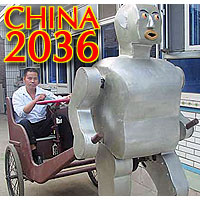
The Federal People's Republic of China, circa 2036.
 The musings of the Economist Intelligence Unit (EIU) — which publishes analysis and forecasts on over 200 countries — are a fun read for those few people lucky enough to have access. Unlike it's conservative cousin, The Economist, EIU is chock-full of strange yet stimulating predictions about the future of the world we live in. EIU's excellent publication Business China (of interest to me for obvious reasons) has just celebrated its 30th anniversary with a special issue. The wrap-up of the past 30 years is interesting enough... China has certainly come a long way since 1976. But it's the lengthy set of predictions about the state of affairs in China 30 years from now that really hits the spot.
The editors at Business China boil down the major issues confronting China between now and 2036 to a single question: Will rampant pollution kill millions of Chinese in their prime, or will they be the happiest bunch of yuppies the world has ever known?
I'll post a few of the best predictions here for my lazy readers... but if you've got the time, do yourself a favor and read the full text below.
On foreign policy:
China’s troubled relationship with Japan is almost certainly headed for some sort of “settling of the score”. China’s deep distrust of and enmity with Japan stemming from the military conflicts of the 20th century have been compounded by Beijing’s suspicion that Tokyo has been abetting the independence movement in Taiwan, a former Japanese colony. More generally, given its insatiable demand for raw materials and natural resources to fuel its industrialisation, it is safe to assume that China will become more assertive in its backyard. That is why Beijing quietly dropped the use of the phrase “peaceful rise”. The reality is that rising big powers always bully small neighbours!
On politics:
In a more imaginative application of creative ambiguity, the province of Fujian will pioneer the use of “free trade investment zones” with their boundaries extending to include airports and ports in both Fuzhou and Xiamen. By thus dispensing with the semantic obstacles posed by the use of national or even provincial designations, direct cross-Strait flights and cargo shipments at last will be authorised. Beijing, Shanghai and Guangzhou, too, will soon follow Fujian’s example and incorporate their airports into existing free trade zones, thereby facilitating direct links to Taipei and Kaohsiung.
On the environment:
In some respects, the country will be more polluted than ever in 2036. For example, it is almost impossible to envision a substantial improvement in air quality without some unforeseen technological leap. Even if China’s economic base shifts from energy-intensive industries like cement and smelting towards less polluting services sectors, or even if the government manages to make China as energy efficient as Japan, it will require a lot more energy. The Economist Intelligence Unit’s current forecast is that China’s GDP will be well over three-times as large (in real terms) in 2036 as it is this year. The power needed to fuel this expansion will undoubtedly come mostly from coal. The country is thus likely to see a steady deterioration of air quality and a steady rise in acid rain and greenhouse gas emissions. Surging levels of car ownership will also see urban air pollution rise to choking levels.
On education:
With 25% of Chinese workers university-educated by 2036, generating suitable employment for the 200m-strong elite force (compared with just 20m in 2005) will become a major headache for the Chinese government. It will rely heavily on the private sector to provide employment. But even the avalanche of new job opportunities in urban areas created by the “Great Migration” of two-thirds of the Chinese population (estimated at 1.5bn in 2036) into cities will not be enough to meet the needs of the country’s well-educated workers. Increasingly, they will look for employment overseas.
On the global effect of China's economic interests:
With China’s economy continuing to rocket ahead, the country is certain to become a major source of investment for other countries 30 years from now. But will this be a good thing for the rest of the world?
In Sudan, the main reason why the UN has been so slow to introduce sanctions against the country for the atrocities taking place in the country’s Darfur region is opposition by China, a veto-wielding member of the UN Security Council. Similarly, China, along with Russia, is shielding Iran from a US-led effort to punish the oil-rich country for pursuing a suspected nuclear-weapons programme. Meanwhile, in Angola, which is now China’s largest supplier of oil, there are concerns that Beijing’s few-strings-attached investment in infrastructure is undoing the IMF’s and World Bank’s efforts to improve governance in the country.
The full text is available below for your perusal, unless you're a copyright lawyer.
Special 30th Anniversary Edition
China in 2036
20 November 2006
Economist Intelligence Unit - Business China
(C) 2006 The Economist Intelligence Unit Ltd.
Anniversary issues are usually backwards-looking and self-congratulatory affairs. Most readers roll their eyes and yawn. So, in this special edition, we decided to ask our China experts to gaze into their crystal balls and offer their best guesses about what China will be like 30 years from now. Will China dethrone the US, at least economically, or will the People’s Republic break up? Will rampant pollution kill millions of Chinese in their prime, or will they be the happiest bunch of yuppies the world has known? Some of our answers may surprise you. Please read on.
Click on the links below to browse by topic:
Foreign Policy
Politics
Environment
Education
Outward Investment
Foreign policy: An unfinished quest for inner peace
China’s “soft power” in the international arena will grow, but its hard power will grow faster
Chinese leaders have always been acutely aware that weak countries have little diplomatic clout. That is, economically and militarily feeble countries—such as yesterday’s China—are at the mercy of great powers. But in light of the dazzling reversal in its economic fortunes, the notion that China’s global influence will also quickly grow through “soft power”—a term coined by Joseph Nye of Harvard University—is gaining currency among Chinese and foreigners alike. The concept, in a nutshell, refers to a country’s ability to influence others by the attractiveness of its ideas, system and culture rather than by sheer coercion.
Interestingly, many Chinese leaders still subscribe to the late Deng Xiaoping’s maxim that China should not seek the “limelight” and take the lead in international affairs before it gets economically much stronger. Even so, examples of China’s growing soft power are becoming more evident by the day. The most recent was the appointment of Margaret Chan, a former Hong Kong civil servant, as the new head of the World Health Organisation. She is the first Chinese national to lead a UN agency.
A country’s hard power and soft power often go hand in hand—as with the US. But hard power is not a sufficient condition for a country to project a lot of soft power (eg, the former Soviet Union). Conversely, a country without massive hard power can wield significant soft power. The UK, for example, punches far above its weight despite its middling economy. Why? As the world’s language of business, English, for one, gives its native speakers disproportionate clout in international settings. Meanwhile, London’s strategic location between continental Europe and the US and its pulsating cosmopolitanism have enabled it to preserve—and enhance—its traditionally pivotal role in global finance.
Spillover effect
Will China be another UK or Soviet Union? The conventional wisdom is that as China continues its swift climb up the global wealth league, its economic influence is bound to spill over into other spheres. If so, that China will wield more soft power in the long run should not be in doubt—its economy is already the world’s fourth largest and holds record foreign-exchange reserves of over US$1trn. By 2036 China’s soft power is certain to manifest itself in, among other things, more Chinese nationals at the helm of the World Bank, the Asian Development Bank, IMF and the alike; a large contingent of Chinese troops in UN peacekeeping missions; and a mushrooming number of overseas Chinese language and cultural centres such as the Confucius Institutes. But less certain is the future balance between the magnitudes of China’s soft and hard power, as well as which it will choose to make greater use of.
The conventional wisdom also suggests that by 2036 the Chinese economy will have overtaken the US economy. On the assumption that China’s annual per-capita GDP growth will average 7% and that the renminbi will appreciate by 25%, Citigroup forecasts that by 2030 China will command the world’s largest economy with per-capita income of US$13,000. This seems more than plausible. China’s GDP has expanded at a double-digit clip annually for the past two decades, while the renminbi faces immense upwards pressure. History has also proven that developing countries can leapfrog developed countries if they leverage their competitive advantages and pursue sound economic policies. With its massive pool of labour, exceedingly high savings rate and close integration with the global economy, China looks very likely to become the next to do so.
That said, it is dangerous to extrapolate long-term economic growth scenarios purely based on past trends. A couple of years before the Asian financial crisis someone predicted that Thailand would catch up to France within 20 years. Today the French simply shrug and say, “imbécile!” For all that is going right for China, it faces serious challenges to continuous growth, such as an ageing population, gaping income disparity and worsening environmental degradation.
It would be equally naïve to assume that Chinese leaders will continue to adhere to Deng’s creed of self-restraint in international affairs—especially as their confidence grows in tandem with China’s might. One reason that the UK is so good at exerting soft power is because it is keenly aware of its limits and avoids hubristic overreach. The opposite is true of the US, which has recently undermined its soft power by relying too much on its awesome hard power. Alas, China will increasingly be tempted to behave more like the US than the UK.
Consider China’s relations with its neighbours. While it is true that Beijing has put its territorial disputes with Russia, Mongolia, India, Vietnam, the Philippines and Japan on the back burner, it does not mean that current Chinese leaders have forgotten about the concessions their imperial predecessors were forced to make under the “unequal treaties” imposed by stronger powers. In particular, China’s troubled relationship with Japan is almost certainly headed for some sort of “settling of the score”. China’s deep distrust of and enmity with Japan stemming from the military conflicts of the 20th century have been compounded by Beijing’s suspicion that Tokyo has been abetting the independence movement in Taiwan, a former Japanese colony. More generally, given its insatiable demand for raw materials and natural resources to fuel its industrialisation, it is safe to assume that China will become more assertive in its backyard. That is why Beijing quietly dropped the use of the phrase “peaceful rise”. The reality is that rising big powers always bully small neighbours!
China’s exercise of its far greater soft power in the future will be limited by a numbers of factors. The relatively difficult-to-fathom Chinese language is one. The gap between how a lot of foreigners see China (nervously) and how most Chinese see it (respectfully) is another. And China’s economic development, as impressive as it has been so far, is more likely than not to encounter a severe setback or two in the next 30 years. Above all, true soft power derives from a country’s inner strengths and ideals. But China still bears too many scars from its recent political history, which have eroded many traditional Chinese values and which have yet to heal completely. To truly revitalise the best Confucian principles and undo Maoism will take several generations, not a mere 30 years.
Politics: The Federal People’s Republic of China
By 2036 the Chinese Communist Party’s grip on a unitary state will only be a façade
In the coming 30 years China will split along geographic lines into a far looser political system than is currently the case. And the country’s superficial administrative coherence will, in reality, mask a number of fractures.
Following the accession of “sixth generation” politburo members in 2011, technocrats will overwhelmingly make up the senior leadership of the Chinese Communist Party (CCP). They will place more emphasis on “inner-party democracy,” which, in their own minds, will entail building up systems and institutions for a more rational and efficient administration. They will not tolerate other power centres, but will allow considerable leeway in the use of alternative administrative models under CCP control. This is why successive party leaders will trumpet vaguely defined “harmonious goals” and a consensual leadership style. But much like Japan’s dominant Liberal Democratic Party, this means sharp factionalism will be the name of the game in private.
Contradictory agendas
Behind the polished façade will lie a contradiction: the “central” government will be increasingly restrained by forces of decentralisation. Since the beginning of the market-opening era in the early 1980s, the leadership in Beijing has relied on consensus among provincial leaders concerning the pace of reforms and burden-sharing for the social costs imposed by economic change. But efforts at tax-sharing agreements and transfer payments will degenerate into a series of debilitating political struggles for Beijing. This will inexorably alter the balance of power in favour of provincial bodies. Such changes, though, will be incremental and the result of crafting specific political bargains. These exercises will, in turn, be both reinforced and exacerbated by factionalism. Favouritism within the politburo will exploit regional loyalties, university alumni networks and the increasingly intertwined linkages among the corporate and political elites.
There will be nothing like a constitutional conference to debate the political framework of this new China. In truth, however, the tradition of ad hoc arrangements will be convenient for not only the provinces, but also the Special Administrative Regions (SARs) of Hong Kong and Macau, as well as the de facto SAR of Taiwan. Throughout the reform period, there have been several precedents for the decentralisation of political power: China’s five Special Economic Zones (SEZs) have been given legislative authority akin to provinces in the early 1990s, and have successfully “piloted” legislation for a number of corporate-sector reforms.
In a more imaginative application of creative ambiguity, the province of Fujian will pioneer the use of “free trade investment zones” with their boundaries extending to include airports and ports in both Fuzhou and Xiamen. By thus dispensing with the semantic obstacles posed by the use of national or even provincial designations, direct cross-Strait flights and cargo shipments at last will be authorised. Beijing, Shanghai and Guangzhou, too, will soon follow Fujian’s example and incorporate their airports into existing free trade zones, thereby facilitating direct links to Taipei and Kaohsiung.
The flip side of such economic decentralisation will entail the off-loading of social obligations, such as education and healthcare, to sub-provincial levels of government. Despite the “harmonious society” policies initiated by Hu Jintao—the Chinese president from 2002 to 2012—and the subsequent attempts to consolidate and standardise provision of public goods, their delivery will remain mostly in provincial hands. The central government will have some success unifying funding options, but its traditional tolerance for discrepancies in standards of governance among localities will only grow.
Regions, naturally, will champion different issues. For example, some will emphasise greater environmental protection. Others, such as Xinjiang and Tibet, will stress mother-tongue instruction in the school system. These differences will become particularly apparent at sessions of the National People’s Congress, during which provincial caucuses will engage in spirited lobbying of central ministries.
In 2036, as in 2006, the Chinese government’s mantra will be preservation of the status quo. But it will not be able to preserve the status quo at all. In fact, incremental tinkering in the centre-periphery relationship will make the balance of power even more lopsided and differences in governance at the provincial level even more pronounced. Formalisation of a new centre-periphery power-sharing arrangement will be discussed with more frequency and urgency within Zhongnanhai. But no consensus with China’s 31 provinces and regions will be reached.
Numerous think-tank conferences on the topic of federalism will get bogged down on the knotty issues of the treatment of the SARs—and the precedent that would be set by absorbing them into the Chinese political system while at the same time according them special status. Hong Kong’s “high degree of autonomy” is due to expire in 2047, and the politburo will be keen to transform Hong Kong’s de facto economic convergence with the Shenzhen SEZ into a de jure accord. Similarly, Taiwan’s effective surrender of full sovereign claims—through its participation in free-trade zones and preferential customs arrangements with the mainland—will need to be normalised in a comprehensive agreement according the island “autonomous” status within China.
Re-defining Beijing’s asymmetrical balance of power with its various dependent jurisdictions will require political maturity to conceptualise possible solutions and political will to implement them. Whether Beijing and the provinces are up to this task will be of decisive consequence to China’s political evolution through 2036—and well beyond that.
Environment: Saying “no” to growing filthy rich
China will be a (relatively) cleaner place 30 years from now
China’s economic rise represents one of the most potent challenges to the environment that the world has ever faced. Environmentalists fret, for example, that if a more developed China produced urban waste at the same rate as the US does today, there would be 3bn tonnes of the stuff every day. This prompts many to call on China to find a “new paradigm for development”, lest its quest for a better-off society ends up trashing a big chunk of the planet. But comparisons with developed countries in 2006 and extrapolations of existing trends probably present a very distorted picture of China’s environment in 2036. In many ways, China will be a cleaner place by then.
Changing priorities
The fundamental problem with extrapolating current trends into tomorrow, is that China’s government has only recently begun to pay attention to environmental issues. In the 11th Five-Year Plan (2006-10), the government has emphasised, for the first time, the need to strive for quality as well as quantity in output. Environmental goals, such as more efficient power and water usage, have been instituted. A renewable energy law came into effect at the start of 2006, mandating power generators to buy from renewable-energy producers. The State Environmental Protection Agency, only raised to ministerial rank in 1998, has also gradually been given more teeth and muscle.
One can take a cynical view of how effective all this will be—in the short term. Energy consumption outpaced GDP growth in the first half of 2006, making a mockery of the target of reducing the amount consumed per unit of GDP by 4% this year. But in the long term, growing pressure from local and international sources will keep the focus on environmental matters, and this will inevitably lead to some change for the better. Already, incremental but significant steps are being made, such as the government’s levy on electricity sales, which goes towards supporting the development of renewable energy.
The most obvious improvements will come in two areas: water and desertification. Arguably China’s water supplies could not get any worse than they currently are—around 90% of urban underground water is polluted, as are 70% of China’s rivers and lakes. Partly because the situation is already so dire, water pollution will be a priority for the government and, happily, progress in the next 30 years will be relatively easy. Treatment of urban sewage will rise rapidly from the current level of 52%. And tougher enforcement of environmental regulations will persuade a growing number of firms to invest more in waste-water treatment systems. While China’s pungent waterways in 2036 will not be at risk of attracting hordes of recreational swimmers, the majority will be substantially cleaner.
The scourge of spreading deserts will also likely pose less concern in 2036 than it does today. The pressure on China’s rural areas will ease as more Chinese migrate to the cities, turning the country from a rural-majority to an urban-majority one. Some might argue that the benefits of fewer farmers could be offset by more intense usage of the land. But this trend, in turn, will be offset by the simultaneous retreat of government support for farming in the most marginal agricultural terrains, which will encourage farmers to concentrate in more fertile regions. This process is already underway—by the end of 2005 around 23m ha of infertile farmland had been returned to woodland or grassland.
China’s environmental future is not all gleaming, however. In some respects, the country will be more polluted than ever in 2036. For example, it is almost impossible to envision a substantial improvement in air quality without some unforeseen technological leap. Even if China’s economic base shifts from energy-intensive industries like cement and smelting towards less polluting services sectors, or even if the government manages to make China as energy efficient as Japan, it will require a lot more energy. The Economist Intelligence Unit’s current forecast is that China’s GDP will be well over three-times as large (in real terms) in 2036 as it is this year. The power needed to fuel this expansion will undoubtedly come mostly from coal. The country is thus likely to see a steady deterioration of air quality and a steady rise in acid rain and greenhouse gas emissions. Surging levels of car ownership will also see urban air pollution rise to choking levels.
The most important challenge for China will be enforcing its environmental regulations. Progress will depend on establishing an independent judicial process and actively engaging China’s civil society. Fortunately for China and for the outside world, the indications to date suggest that the environment will be at the vanguard of reforms pushing the country towards both these goals.
Education: More is better
China will produce millions of new university graduates who will be generally smarter, wealthier and happier
Disparities are entrenched (or embraced?) as a way of life in China. Nowhere is this more apparent than in the classroom. Even 30 years from now, at rural schools, the chalk and blackboard will remain the primary teaching prop. At city schools, though, the palmtop computer will be taken for granted. The iron-rice-bowl egalitarianism of the pre-1979 era will only get a brief mention in a course on history—not a popular subject, incidentally, for China’s über-achievers obsessed with a more brilliant future.
As China’s economy grows bigger and races up the value chain, will its educational system be able to supply the armies of qualified workers the country needs? The short answer is yes—with a lot of help from the private sector. Many more Chinese university students will be trained at tertiary institutes set up by private business and home-grown philanthropists. By the end of the 16th Five-Year Plan (FYP—2031-35) Chinese universities will be producing about 8m graduates each year, or about 1% of the workforce.
With government expenditure on education peaking at 4% of GDP under the 11th FYP (2006-10), the private sector will shoulder the extra spending demand. These private institutions of higher learning will be more in tune with economic demands than the traditional state-run universities. This will result in twice as many privately funded universities with full undergraduate courses as state-run ones, compared with the 1:20 ratio in 2006.
Following in the footsteps of Beijing Geely University, every leading enterprise (numbering about 100) in the country will operate an institution of higher education. They will generally offer a curriculum patterned after Ivy League schools in the US. These enterprise universities focused on teaching directly relevant skills required by the job market will be more sought-after than many joint-venture campuses set up by China’s traditional academic institutions and their Western counterparts.
Always flexible, the country’s erstwhile party schools—funded by a club of 100m-strong well-heeled “communists” who were the first to be allowed to get rich—will aim to offer the world’s best MBA facilities at well-manicured campuses equipped with five-star restaurants and hotels for teaching staff and students from all over the world. These schools will also operate the highly popular Confucius Institutes, first set up in 2004 in South Korea, to promote Chinese language and culture to foreigners. Students will be drilled in the core Confucian philosophy of social harmony, collective responsibility and, most importantly, respect for authority. Foreign governments besieged by religious terrorism and ethnic unrest will find it especially useful to send their bureaucrats to China for such an education.
No thanks to humanities
The privatisation trend will reinforce the country’s bias in favour of science and engineering, as product innovators and infrastructure builders continue to attract great market demand. China will remain the single largest supplier of engineers in the world with some 4m graduating in the discipline each year, compared with a paltry 120,000 in the US. But the US will still lead in technological innovation, as the country’s liberal environment continues to inspire a gaggle of geeks in both the classroom and the garage.
With 25% of Chinese workers university-educated by 2036, generating suitable employment for the 200m-strong elite force (compared with just 20m in 2005) will become a major headache for the Chinese government. It will rely heavily on the private sector to provide employment. But even the avalanche of new job opportunities in urban areas created by the “Great Migration” of two-thirds of the Chinese population (estimated at 1.5bn in 2036) into cities will not be enough to meet the needs of the country’s well-educated workers. Increasingly, they will look for employment overseas.
With considerably fewer peasants left after the great urban migration, farms will become relatively larger and farming more mechanised. Agricultural institutes, financed by private investors who see an opportunity to capitalise on a “green revolution”, will fan across the country, teaching farm management and new cultivation methods.
Despite the persistent rural-urban divide, farmers’ income levels will increase with higher-value crops and economies of scale. Mob violence will flare up on occasion, but these will be driven less by wealth disparities than by local injustices. Such actions will lack national appeal. A better-educated population, preoccupied with self-advancement, will have little interest in rocking the system.
Outward investment: Tainted money
Rising overseas investment by Chinese companies will help keep despots around the world in business longer
One less-noted feature of China’s current economic boom is the strong growth in outward foreign direct investment (FDI). In 2005 Chinese investment abroad surged by 526% compared with 2004, reaching US$11bn. With China’s economy continuing to rocket ahead, the country is certain to become a major source of investment for other countries 30 years from now. But will this be a good thing for the rest of the world?
The experience so far, especially in Africa where China has been on an investment spree, suggests that the longer-term impact will be far from positive. Indeed, China is coming under criticism from various international observers for undermining Western attempts to improve governance and reduce corruption in African countries. China, for instance, is blamed for abetting genocide and human rights abuses in Sudan. To maintain access to the country’s oil, China has refused to censure the internationally ostracised regime in Khartoum. If these are early signs of China’s future behaviour abroad, the outside world would be right to worry.
The main factor driving China’s outward FDI is its need to secure the energy resources and raw materials, such as copper and iron ore, that are necessary to fuel the country’s booming economy. With domestic production of oil stagnant, and demand forecast to grow by around 7% a year, China in particular is becoming a central player on the world energy scene. This is why, despite the unsuccessful attempt by the state-owned China National Offshore Oil Corp in 2005 to take over Unocal, a US-based oil firm, Chinese energy companies will continue to look abroad.
China’s hunger for oil and other natural resources means much of China’s future investment will flow to developing countries in Africa, Central Asia and the Middle East. However, even as China gets richer and more powerful, Western observers fear that it may continue to pursue only its narrow self-interests rather than doing its part to help solve global problems.
In Sudan, the main reason why the UN has been so slow to introduce sanctions against the country for the atrocities taking place in the country’s Darfur region is opposition by China, a veto-wielding member of the UN Security Council. Similarly, China, along with Russia, is shielding Iran from a US-led effort to punish the oil-rich country for pursuing a suspected nuclear-weapons programme. Meanwhile, in Angola, which is now China’s largest supplier of oil, there are concerns that Beijing’s few-strings-attached investment in infrastructure is undoing the IMF’s and World Bank’s efforts to improve governance in the country.
Of course, China may amend its ways as time goes by. Part of the reason why Chinese companies so often act “unethically” is due to their lack of international business experience. And the root of Chinese firms’ bad behaviour lies in weak domestic corporate-governance standards and managerial transparency. As standards at home improve, the behaviour of Chinese companies abroad should also improve.
Few good choices
Less certain is whether the behaviour of the Chinese government will change. On the one hand, “non-interference” in the affairs of other countries is enshrined in China’s foreign-policy doctrine. On the other hand, China does not deliberately set out to make allies of the world’s pariah regimes. It is just that, as a late entrant in the race to secure access to raw materials, China is often left with little choice but to invest in countries like Sudan, which have been abandoned by many Western countries.
China is increasingly keen to be seen as a responsible global power. If so, the Chinese government must start acting the part. As long as it continues to turn a blind eye on genocide and cosy up to despots like Zimbabwe’s Robert Mugabe, the rest of the world will wonder if China’s overseas investment will truly benefit recipient countries in the long term.
END ITEM

posted November 21, 2006 at 10:43 PM unofficial Xinjiang time | HaoHao This!
Comments
God, do i hate the Economist magazine. If there's a worse fascist rag out there, I haven't seen it yet.
The comment above was posted by Gill at November 22, 2006 03:08 AM unofficial Xinjiang time.
The assumption of ceteris paribus would lead one to such pessimistic conclusions. I tend to believe that technology plus interdependence will allow us to overcome the most dire predictions.
However, on the other hand, new powers rising without major disruptions to the global system would be ahistorical.
The comment above was posted by Gsmoove at November 23, 2006 09:39 AM unofficial Xinjiang time.
The big hole is Taiwan. Everyone forgets this. We should all, always, be following internal Taiwanese politics. And the CPC has painted itself into a corner.
In history, small details like this tend to radically and permanently change predictions.
Much, much more likely is this:
After nearly succumbing to bitter internal rivalries, Taiwan's political class finally came to the realization that their de-facto independence was more desirable than any kind of political union with China. "Taiwanese consciousness" took hold of both the pan-blue and green camps, and even the KMT, in an attempt to win power back, was forced to back the re-writing of the RoC constitution, with a full Constitutional Conference and the resulting name change to the Republic of Taiwan.
When China forced the issue, Taiwan was backed into a corner, and in a show of democratic vigour, it didn't blink.
The world was stunned, and was totally unprepared. China's leaders were also shocked into action. They had arrogantly believed that they could bully Taiwan without repercussions. The press of the world's democratic nations wholeheartedly endorsed Taiwan's position as flourishing Asian democracy, and everyone thought China would never use the military option.
(Two possible outcomes)
1. China declined to use its military force option, and though unhappy with the situation, was eventually forced to tacitly recognize Taiwan as an independent country, thus saving its own economy from ruin. However, this was the last fatal sign of weakness within the faltering CPC, and the resulting attempted coup and chaotic reorganization of the Chinese Government left the nation in tatters, setting the country back 20 years and resulting in the current state of uncertainty and economic instability. With international intervention and support, it is predicted that China's provisional government will be able to restore confidence and order before the coming 2015 elections, the first national elections in Chinese history. Already, however, the southern province of Guangdong, which effectively removed itself from the conflict and is independent in all but name, is fanning disintegrationist tendencies all along China's economic and regional fault lines.
The world watches and waits with baited breath as this greatest episode of Chinese history unfolds.
Or, this less encouraging but far more likely scenario (because the CPC knows that #1 is pretty damned likely, if not inevitable):
2. Japan and the U.S. reacted swiftly and with great alarm as China landed missiles throughout central Kaosiung and targeted government offices in Taipei. The Taiwanese, previously factionalized, rallied around their embattled president, and the island girded itself for a massive invasion. Two Chinese ships were destroyed in harbours in Fujian, and several Taiwanese planes were shot down while performing retaliatory strikes on several Chinese cities, in which shipping facilities and airports were badly damaged.
Japan activated its security agreement with Taiwan, and South Korea was reluctantly forced to choose the Japan-US alliance over its generally excellent relations with Beijing. With a million soldiers on the Chinese border, Vietnam, always suspicious of China, sided with the United States, and threatened daily incursions into Chinese territory. In a bizarre reversal of history, American and Australian military advisors are helping to direct Vietnam's efforts.
India has remained officially neutral, but the Indian press indicates India's true stance-- India's support for Tibetan independence, always lukewarm, has now reached fever pitch. The only item restraining India is China's support for Pakistan. The next Indian election hinges on BHP support for the Taiwanese-American alliance and fuming anger at Pakistan's continued belligerence. India and Pakistan threaten to turn this war over local democracy into a vast, pan-Asian conflict.
Billions of dollars of capital have fled China, Taiwan, Japan and South Korea, parking in Singapore and Europe.
The Chinese economy is facing near total collapse as it faces global sanctions and its options are now reduced to a pan-Asian war of conquest which it can't possibly win or deep, abiding and probably total humiliation at the negotiating table. It will assuredly face embittered, suspicious and hostile enemies who are keen to pull the teeth out of the dragon. Taiwan has been guaranteed full reparations and a central seat at the conference, itself a deep humiliation to the Chinese Communist Party and one which it will be hard-pressed to sell as anything but a massive loss of face to the Chinese public.
China's ambitions to be the political leader of Asia have come crashing down in the flames of the CPC's quest for survival.
All that is certain about China today is that the government is clamping down on all forms of dissent, media and political freedoms that had been relaxed are now under tight draconian control, and political and economic refugees are arriving by the thousands daily in the West. Canada has been forced to absorb almost half a million people fleeing the regional chaos, and Australia has beefed up its coastal defence force to deter further migrants.
The future development of Asia has been marred by the explosive tensions and muscle being flexed by China. The only wildcard left is to see how nearly bankrupt Russia deals with the crisis. Whatever Russia does, it will certainly be opportunistic rather than principled.
The final test will be to see how desperate China's corrupt ruling class has become. In their quest to hold on to power, and facing total humiliation over the negotiating table, will they continue fanning Han-Chinese nationalism and will the Chinese government turn what should be an opportunity to reform into a global war?
Few anywhere in the world can sleep well.
The comment above was posted by Craig at December 18, 2006 02:43 AM unofficial Xinjiang time.
Craig, however...
The CCP is nuts over Taiwan. If things come to pass, they might opt to enact or threaten several extremely insane measures to keep the neighbors out of a Taiwan strait conflict.
Starting would be:
1- Threatening to seize the assets of foreign investors in China.
- Threatening to dump US treasury bonds to start a world economic crisis.
3- Threatening to arm North Korea with nukes.
4- Threatening to nuke intervening American Aircraft Carriers.
5- Threatening to nuke American cities.
The comment above was posted by Inst at January 15, 2007 09:49 AM unofficial Xinjiang time.
Craig,
Unless Americans are irrational, there will be no war between China and US. Why? Becuase both China and US have enough ICBM to destroy the world ten times over. US definitely will not go to war over Taiwan because the condition of Taiwan defence act states Taiwan must not provoke the attack i.e. going toward independence in name (see Chen's interview on CNN, the news reporter pointed out to Chen). Also there will be no UN sanctions, because China can just veto all of them.
In addition, do you think US will collapse its own economy because of Taiwan? I think the clear answer is a "no".
So here is the 3rd possibility: Taiwan declears its new independence, China invades, and rest of the world just let it happen (just like when Russia invaded Cheychna), and the war will be over in like 3 months, followed by many so call Taiwanese sending away to Chinese labor camps in western China. Amensty International is going to make a big deal out of it and so do the news agencies, but there is nothing they can do. Any resolutions against China brought up in UN will be vetoed by China. Time passes by, news and people forget it ever happened (I can give you an example again, and its called East Timor).
The comment above was posted by Arty at February 8, 2007 05:51 AM unofficial Xinjiang time.
China is a bad, dirty, broken country and needs to be put out of its misery.
The comment above was posted by nanheyangrouchuan at March 7, 2007 12:56 PM unofficial Xinjiang time.
Craig, Arty - Taiwanese politicians may have been making rather alarming statements of late, as well as changing the names of state owned enterprise etc., but this doesn't mean they would actually go all the way to declaring independence, here's why:
1) A referendum would have to take place before any such declaration could be made. The last such referendum was a vote on whether the government should be given the right to hold a referendum on independance as a retaliatory move if Taiwan came under attack. The other parties boycotted it and it didn't even reach the 50% of the voting public that was required to make it quorate. It is highly dubious that the result of a similar vote in the future would be any different.
2) More than ten percent of the Taiwanese population regularly visit mainland China on business, with half of that total working on a semi-permanent basis here (and most of those being 25-55 year old men with 'second wives' in China). This figure is only set to increase, as more an more companies relocate their manufacturing plant to the mainland. I work for Foxconn (the overseas branch of Hon(g) Hai electronics), where all of the mid-level and senior management comes from Taiwan, most of whom come here being unable to find well-paid work in Taiwan despite holding master's and doctorate degrees from overseas universities. Given all this cross-strait business activity, it seems highly unlikely that an actual full-scale break with the mainland could be made except in the most extreme circumstances.
3) Whilst his recent inditing on corruption charges may have hurt his chances in the 2008 presidential elections, the charismatic KMT leader Ma Yingjiu remains strong favourite to replace Chen Shuibian. It is at least inconcievable that someone more pro-independence than Chen will hold power after 2008. Annette Lu is far too much of a controversial figure to stand much of a chance, thus leaving only Ma and Frank Hsieh (fairly moderate DPP Premier) with any real chance of becoming president, neither of whom is likely to declare independence.
4) Despite what 'Inst' says, the CPC is not 'nuts'. It is a corrupt clique that will stop at nothing to hold onto power. It's claim on Taiwan stems from the days following the civil war, when the threat of the return of American-backed Nationalist forces to the mainland seemed a distinct possibility, and could be also be used as an excuse to crack down on so-called 'reactionary' elements within the Chinese population. The threat of such a confict meant that the country could be maintained on a war footing, and to this day allows the Chinese government to explain its high defense spending as 'defending national unity'. It simultaneously allows the government to smear anyone supporting regional autonomy as 'splittist', thus allowing it to stiffle the growth of the kind of regional autonomy movements which were a main cause of the collapse of the Soviet Union. For all of these reasons opposition to Taiwan independence is hardly the matter of principle that they make it out to be. If the Chinese government really were bent on recovering each and every one of the various territories that it lost during the nineteenth century (i.e., Mongolia, Eastern Siberia, Arunachal Pradesh etc.), then war could hardly be avoided, but it isn't. The CPC is therefore quite likely to seek a compromise granting almost everything short of full de jure independence in any negotiation. The only people who are somewhat 'nuts' about Taiwan are those elements of the Chinese population who actually believe government propaganda, of whom, unfortunately, there are quite a few.
Finally, to whoever said that China is a "bad, dirty, broken country and needs to be put out of its misery", why don't you try saying this to some Chinese people and see what they say?
The comment above was posted by Gilman at March 9, 2007 12:40 PM unofficial Xinjiang time.
sex shop | seks market | seks shop | sex shop | erotic shop | sex shop | sex shop | penis büyütücü | vibratör | sex shop | seks shop | penis büyütücü | vibratör | geciktirici sprey | seks partner | arkadaş | arkadaşlık | partner | arkadas | seks partner | iş elbiseleri | iş kıyafetleri | önlük | üniforma | iş elbisesi | yağmurluk | penis büyütücü | penis büyütme | penis | geciktirici sprey | geciktirici | erken boşalma | geciktirici krem | vibratör | penis | dildo | penis büyütücü | penis büyütme | penis büyütmek | penis büyütücüler | jel vibratör | jel penis | jel dildo | belden bağlamalı vibratör | belden bağlamalı penis | belden bağlamalı dildo | protez penis | realistik vibratör | fantazi ürünleri | sado mazo | iç giyim | vibratör set | geciktirici sprey | geciktirici | geciktirici krem | azdırıcı | vajina | penis büyütme | şişme bebek | şişme manken | tala tüy dökücü | tüy dökücü | tüy dökücü krem | penis | şişme erkek manken | şişme erkek bebek | afrodizyak | uyarıcı | feromon | masaj yağı | kremler sikiş | seks seyret | porno seyret | video seyret | sikiş seyret | porno | sex | seks | sikiş izle | porno izle | seks izle | sex izle | gizli çekim | rus sikiş | amatör sikiş izle | gizli çekim sikiş izle | gizli çekim | gizli çekimler | gizli cekim | türk gizli çekim | gizli çekim videoRozet | İsimlik | Grafik Tasarımı | Reklam Tanıtım | Grafik Tasarim | Tükenmez Kalem | Kokart | Reklam Hizmetleri | Kartvizit Tasarımı | Ofset Matbaa | Kartvizitler | Eşantiyon | Promasyon | Reklam Ürünleri | Promosyon Kalem | Reklam Ajanslari | Reklam Ajansi | Reklam Promosyon | Tanıtım Ajansı | Kartvizit Tasarım | Kristal Plaket | Promosyon Anahtarlık | Promosyon Firmaları | Promosyon Malzemeleri | Promosyon Ürünler | Anahtarlik | Şilt | Broşür Tasarımı | Afiş Tasarımı | Broşür Tasarım | Reklam Promosyon | Kadife Kutu | Atatürk | Atatürk Köşesi | Atatürk Resimleri | Atatürk Fotoğrafları | Ataturk | atatürk resmi | atatürk şiirleri | atatürkün anıları | atatürk ün hayatı | kemal atatürk | atatürk hayatı | atatürk inkılapları | atatürk hayati | atatürk köşeleri | atatürk rozeti | atatürk büstü | atatürk kravat | atatürk anahtarlık | atatürk saati | atatürk cam | atatürk porselen | atatürk çerçevesi atatürk | atatürkcü düşünce | atatürkcü düşünce derneği | add | ödül | reklam | plaket | kupa | madalya | madalyon | kristal plaket | şilt | isimlik | cam plaket | lazer kesim | metal etiket | kaşe | promosyon kupa | yaka kartı | ödüller | damla etiket | kupa baskı | madalyonlar | plaket yapımı | madalya plaket | plaketler | plaket imalatı | kupa imalat | kupa imalatı | plaket imalat | cam kupa | kristal cam | plaket baskı
The comment above was posted by sex shop at December 23, 2009 03:28 AM unofficial Xinjiang time.
Having been a part of the Online Universal Work Marketing team for 4 months now, I’m thankful for my fellow team members who have patiently shown me the ropes along the way and made me feel welcome
The comment above was posted by david baer at December 29, 2009 09:00 AM unofficial Xinjiang time.
Having been a part of the Online Universal Work Marketing team for 4 months now, I’m thankful for my fellow team members who have patiently shown me the ropes along the way and made me feel welcome
The comment above was posted by david baer at December 29, 2009 12:30 PM unofficial Xinjiang time.
revizyon ile organize matbaacılık brnckvvtmllttrhaberi
revizyon ile organize matbaacılık brnckvvtmllttrhaberi
revizyon ile organize matbaacılık brnckvvtmllttrhaberi
revizyon ile organize matbaacılık brnckvvtmllttrhaberi
revizyon ile organize matbaacılık brnckvvtmllttrhaberi
revizyon ile organize matbaacılık brnckvvtmllttrhaberi sizlere
lida sitemiz
lida bu sitemizle beraber
yabancı dizi yabancı olan her şeyi
dizi izle me sitesidir.
dizi
canlı dizi izle
sohbet etmenizi öneririz.
The comment above was posted by dizi izle at January 21, 2010 02:26 PM unofficial Xinjiang time.
revizyon ile organize matbaacılık brnckvvtmllttrhaberi
revizyon ile organize matbaacılık brnckvvtmllttrhaberi
revizyon ile organize matbaacılık brnckvvtmllttrhaberi
revizyon ile organize matbaacılık brnckvvtmllttrhaberi
revizyon ile organize matbaacılık brnckvvtmllttrhaberi
revizyon ile organize matbaacılık brnckvvtmllttrhaberi sizlere
lida sitemiz
lida bu sitemizle beraber
yabancı dizi yabancı olan her şeyi
dizi izle me sitesidir.
dizi
canlı dizi izle
sohbet etmenizi öneririz.
The comment above was posted by dizi izle at January 21, 2010 02:29 PM unofficial Xinjiang time.
Cheap IPODs
Cheaps Computer Parts
Social Bookmarks
Shopping Online
Cheaps Computer Parts
Social Bookmarks
Cheap Digital Cameras USA
Cheap Eye Glasses
Technology News
Samsung LN65B650 Samsung UN46B6000 samsung ln19a650 samsung ln19b360 samsung ln26b360 samsung ln32b360 samsung ln32b650 samsung ln37b530 samsung ln37b650 samsung ln40b530 samsung ln40b550 samsung ln40b650 samsung ln46a750 samsung ln40b650 samsung ln46a750 samsung ln46b550 samsung ln46b650 samsung ln52a630 samsung ln52a650 samsung ln52b550 samsung pn50b450 samsung pn63a650 samsung pn58a650 samsung pn58a760 samsung pn63b550 samsung ln46b530 Samsung LN22B350 samsung ln22b460 samsung ln32b530 toshiba 19av500u samsung ln46b530
Toshiba
toshiba 15lv505 toshiba 22lv611u toshiba 40rv525rtoshiba 42av500 toshiba 23hlv87 toshiba 22lv505 toshiba 23hlv87 toshiba 26av502u-20 toshiba 26lv610u toshiba 32av502u toshiba 37av502r
LG LCD TV
LG 37LH30 | LG 42LH40 | lg electronics 42pq30
Vizio LCd TV & Vizio
Viore LC22VH55 Viore LC32VF55 Viore LED24VF60 VIZIO VA220E Vizio VA320M VIZIO VBR100 VIZIO VM230XVT VIZIO VO320E vizio va19l vizio vo32lf vizio vp505xvt
VIZIO VM230XVT Viore LED22VF60 sylvania lc225sl9 Sylvania LD195SSX VIZIO VM230XVT Viore LED22VF60 Axion AXN-8905 Axion AXN-8905 Coby TFTV1212
Sony LCD TV
sony kdl-52v5100 sharp lc32d47u sharp lc32db60u sharp lc40e77u sharp lc26sb24u Sony KDL-52XBR9 Sony DPF-D72 sony kdl-32xbr9
Other astore LCD TV
Panasonic SC-BT300 Emerson Slc195em8 coby tfdvd1574 coby tftv1022 coby tftv1923 Cheap LCD TVs Technology ViewSonic VT2430 Eviant T7 Supersonic SC491 ViewSonic VA2323wm
Acer AOD250-1383 Acer AOD250-1197 Acer AOD250-1584 Acer AOD250-1694Acer AOD250-1842 Acer AR1600-U910H Acer AS5542-5462 Acer AS5738-6969Acer AS1410-2497 Acer AS1410-2039 Acer AS5738Z-4111 AKG K 242Apple iMac MB950LL ASUS G51J-A1 ASUS K50IJ-X8 ASUS UL30A-A2 Samsung N140-14B HP Mini 110-1125NR HP Pavilion DV7-3060US HP G61-320US HP Pavilion DV6-1350US Samsung N130-13B Toshiba Mini NB205-N230 Toshiba Mini NB205-N325BL Toshiba Mini NB205-N325BN Toshiba Mini NB205-N325WH Toshiba Mini NB205-N330BL
garmin 1200
garmin 1250
garmin 1260t
garmin 1300
garmin 1350
garmin 1370t
garmin 1390t
Cheap Garmin GPS
Garmin 855 885T
Garmin Edge 500
Cobra GPSM 7700
Cheap Garmin GPS
Handheld GPS
Garmin Edge 500
Magellan RoadMate 1424
Magellan RoadMate 1424
TomTom XL 340S
kodak z1485 canon sx200is canon fs200 canon sd1200is kodak m380 olympus fe-5010 olympus 7000 samsung sc-dx205 olympus fe-3000 samsung smx-f34Olympus PEN E-P2 Sony Alpha DSLRA850 Fujifilm FinePix Z30 Samsung HMX-H104 Panasonic DMC-GF1 Samsung HMX-R10 Samsung HZ25W Samsung HZ25W Canon VIXIA HF S11 HD Canon XH-A1S Casio Exilim EX-G1 Casio Exilim EX-Z90 Panasonic HDC-HS300 Samsung SMX-K40 Sony BDP-CX960 Fujifilm FinePix S2000HD Nikon TC-20E III Opteka OPT15 Panasonic AG-HVX200A Panasonic HDC-HS20 Panasonic Professional AG-HMC40 Panasonic Pro AG-HMC150 Pentax K-7 Polaroid DVF-130TC Polaroid CAA-330RC Samsung CLX-3175 Samsung SMX-K45 Sony DPF-V1000 Sony HDR-FX7 Sony HVR-HD1000U
toshiba 19av500u
Technology
Toshiba NB205-N230
Acer AOD250-1842
Toshiba NB205-N325BN
Acer AOD250-1694
Acer AOD250-1695
Acer AOD250-1694
Acer AOD250-1197
HP 110-1115NR
HP 110-1125NR
Samsung N130-13P
The comment above was posted by teayneverdie at January 29, 2010 01:21 PM unofficial Xinjiang time.
hiphop|sikiş izle|rap|chat sohbet|sikiş |porno|porno siteleri|sikiş izle|sikiş| kelebek|sohbet odalari|tatil|mynet sohbet|chat|sohbet|kelebek chat|kelebek sohbet|porno izle|chat sikişme alışveriş
The comment above was posted by sohbet at April 7, 2010 09:07 PM unofficial Xinjiang time.
Interestingly, many Chinese leaders still subscribe to the late Deng Xiaoping’s maxim that China should not seek the “limelight” and take the lead in international affairs before it gets economically much stronger. Even so, examples of China’s growing soft power are becoming more evident by the day. The most recent was the appointment of Margaret Chan, a former Hong Kong civil servant, as the new head of the World Health Organisation. She is the first Chinese national to lead a UN agency.
The comment above was posted by New York at April 16, 2010 08:30 PM unofficial Xinjiang time.
- دردشة الخليج -
- شات الخليج -
- الخليج -
- شات المميزة
- دردشة -
- دردشه -
- شات -
- شات بنات -
- شات خليج العرب -
- شات الخليج العربي -
- دردشة كتابية -
- شات كتابي -
- دردشة المميزة -
- المميزة -
- شات بنات -
- دردشه الخليج -
- دردشة كتابية -
- شات كتابي -
- شات خليجي -
- دردشة سعودية -
- دردشة بحرينية -
- دردشة عراقية -
- دردشة يمنية -
- دردشة قطرية -
- دردشة اماراتية -
- دردشة سودانية -
- دردشة لبنانية -
- دردشة مغربية -
- دردشة خليجية -
- دردشة فلسطينية -
- دردشة اردنية -
- دردشة مصرية -
- شات جنسي -
- دردشة جنسية -
- شات صوتي -
- دردشة صوتية -
- شات صوتي -
- دردشة صوتية -
- مركز تحميل الاغاني -
- دليل دردشة -
- دردشة ابن اليمن -
- دردشة صوتية يمنية -
- دردشة صوتية عمانية -
- دردشة صوتية اماراتية -
- دردشة صوتية قطرية -
- دردشة صوتية بحرينية -
- دردشة صوتية كويتية -
- دردشة صوتية سعودية -
- دردشة صوتية خليجية -
- دردشة صوتية سودانية -
- دردشة صوتية مصرية -
- دردشة صوتية فلسطينية -
- دردشة صوتية سورية -
- دردشة صوتية لبنانية -
- دردشة صوتية اردنية -
- دردشة صوتية شامية -
- دردشة صوتية عربية -
- دردشة عربية -
- دردشة فور عدن -
- شات كتابي -
- دردشة شامية كتابية -
- شات سعودي -
- شات عربي -
- شات صوتي -
- شات عراقي -
- شات كويتي -
- شات بحريني -
- شات اماراتي -
- شات قطري -
- شات عماني -
- دردشة ليبيا -
- شات يمني -
- شات مصري -
- شات سوداني -
- شات اردني -
- شات سوري -
- شات فلسطيني -
- شات مغربي -
- شات لبناني -
- شات جزائري -
- شات تونسي -
- شات ليبي -
- دردشة خليجية -
- دردشة تونس -
- دردشة ليبية -
- دردشة نار الحب -
- دردشه تعب قلبي -
- دردشه بنت السعوديه -
- دردشة دلع -
- دردشة حبنا -
- دردشة دلع نجد -
- دردشة جزائرية -
- دردشة سورية -
- دردشة كويتية -
- دردشة عمانية -
- دردشة سورية -
- دردشة سعوديات -
- دردشة عربيات
- دردشة كويتيات -
- دردشة بحرينيات -
- دردشة عراقيات -
- دردشة يمنيات -
- دردشة قطريات -
- دردشة اماراتيات -
- دردشة عمانيات -
- دردشة اردنيات -
- دردشة لبنانيات -
- دردشة سوريات -
- دردشة فلسطينيات -
- دردشة مصريات -
- دردشة مغربيات -
- دردشة سودانيات -
- دردشة بنات تعز , شات بنات تعز -
- دردشة بنات المغرب , شات بنات المغرب -
- دردشة سكسية -
- شات مصراوي -
- اغاني عربي mp3 -
- طرب موقع طرب اغاني طرب اغاني mp3 -
- دردشة بنت المغرب
- دردشة بنت تعز -
- دردشة ابن اليمن , شات ابن اليمن -
- منتديات الخليج -
- المنتدى العام -
- المنتدى الاسلامي -
- اناشيد اطفال اناشيد اسلامية -
- اللغة الانجليزية - ترجمة -
- القضـايا الساخنـة والحـوار -
- آخر الأخبار والأحداث -
- الترحيب والاهداءات -
- مجلس الاعضاء -
- كرسي الاعتراف -
- همس القوافي -
- خواطر - قسم الخواطر الأدبية -
- قصص وحكم -
- الرياضة والشباب -
- صور سيارات -
- الفرفشه والضحك -
- الالعاب والمسابقات -
- صور وعجائب -
- صور انمي - افلام انمي -
- افلام ومسلسلات ومسرحيات -
- استار اكاديمي 7 -
- السياحة والسفر - مناظر طبيعية -
- الحياة الزوجية - الاسرة والطفل -
- عالم حواء - فساتين ومكياج وموضة -
- الديكور والاثاث المنزلي -
- اسـرار البنـات -
- منتدى مـائدة الخليج -
- الصحة والطب -
- بلاك بيري و ايفون -
- قسم البرامج العربية والمعربة -
- الجرافيكس والتصميم -
- ملحقات الفوتوشوب والفلاش -
- قسم تصاميم الفلاش والسويتش -
- البرامج والكمبيوتر و تبادل الخبرات -
- مشاكل وحلول القسم الـتـقـنـي -
- توبيكات ملونة - صور ماسنجر -
- مسجات - رسائل وسائط -
- مــنــتــدى تغــيير النــك نيـــم - الأســم -
- شات الخليج -
- دردشة الخليج -
- توبيكات -
- طرب -
- اغاني -
شات صوتي
شات سوري
شات سوريا
دردشة سورية
دردشة سوريه
دردشة سوريات
شامية
شات شامي
شات الشام
دردشة سوريا
دردشة شاميه
دردشة شاميات
منتديات سورية
منتدى سوريات
منتدى شامي
منتدى سوريا
منتديات الشام
منتديات شامية
The comment above was posted by دردشة الخليج at April 20, 2010 02:09 AM unofficial Xinjiang time.
cam balkon cam balkon
cam balkon cam balkon
cam balkon cam balkon
cam balkon cam balkon
cam balkon cam balkon
cam balkon cam balkon
cam balkon cam balkon
cam balkon cam balkon
cam balkon cam balkon
cam balkon cam balkon
düğün salonu düğün salonu
ılgaz ılgaz
çankırı çankırı
web tasarım web tasarım
kiralık bobcat kiralık bobcat
mynet sohbet mynet sohbet
sohbet et sohbet et
sohbet et sohbet et
The comment above was posted by web tasarım at April 21, 2010 03:21 AM unofficial Xinjiang time.
İstanbul Sohbet
İzmir Sohbet
Ankara Sohbet
Adana Sohbet
Adıyaman Sohbet
Afyonkarahisar Sohbet
Aksaray Sohbet
Amasya Sohbet
Antalya Sohbet
Artvin Sohbet
Aydın Sohbet
Balıkesir Sohbet
Adıyaman Sohbet
Bilecik Sohbet
Bingöl Sohbet
Bitlis Sohbet
Bolu Sohbet
Bursa Sohbet
Burdur Sohbet
Denizli Sohbet
Diyarbakır Sohbet
Edirne Sohbet
Elazığ Sohbet
Batman Sohbet
Bayburt Sohbet
Düzce Sohbet
Iğdır Sohbet
Karabük Sohbet
Karaman Sohbet
Kilis Sohbet
Kırıkkale Sohbet
Osmaniye Sohbet
Yalova Sohbet
Bartın Sohbet
Ardahan Sohbet
Şanlıurfa Sohbet
Uşak Sohbet
Tunceli Sohbet
Trabzon Sohbet
Çorum Sohbet
Erzurum Sohbet
Niğde Sohbet
Diyarbakır Sohbet
Kocaeli Sohbet
Mardin Sohbet
Muş Sohbet
Edirne Sohbet
Kars Sohbet
Gebze Sohbet
Nevşehir Sohbet
Rize Sohbet
Çankırı Sohbet
Çanakkale Sohbet
Kırklareli Sohbet
Kırşehir Sohbet
Mersin Sohbet
Kayseri Sohbet
Hatay Sohbet
Gümüşhane Sohbet
Giresun Sohbet
Gaziantep Sohbet
Isparta Sohbet
Kastamonu Sohbet
Hakkari Sohbet
Konya Sohbet
Kütahya Sohbet
Sakarya Sohbet
Ordu Sohbet
Erzincan Sohbet
Samsun Sohbet
Eskişehir Sohbet
Siirt Sohbet
Zonguldak Sohbet
Yozgat Sohbet
Sinop Sohbet
Kahramanmaraş Sohbet
Tokat Sohbet
Sivas Sohbet
Malatya Sohbet
Van Sohbet
Tekirdağ Sohbet
Manisa Sohbet
Şırnak Sohbet
Muğla Sohbet
Ardahan Sohbet
Ağrı Sohbet
Samsun
The comment above was posted by sohbet at April 28, 2010 12:20 PM unofficial Xinjiang time.
China’s troubled relationship with Japan is almost certainly headed for some sort of “settling of the score”. China’s deep distrust of and enmity with Japan stemming from the military conflicts of the 20th century have been compounded by Beijing’s suspicion that Tokyo has been abetting the independence movement in Taiwan, a former Japanese colony.
Articles
PR
Miami
Market
Real Estate
Miami
News
Furniture
Directory
Patio Furniture
Weight Loss
Diet
Furniture
News
Real Estate
The comment above was posted by Miami at May 6, 2010 01:01 AM unofficial Xinjiang time.
حصري
منتديات حصري
فتاوى
حكم
الاسلام
احكام
رمضان
شهر رمضان
منتدى رمضان
دروس رمضانيه
فلاشات رمضانيه
القران الكريم
تلاوه - ترتيل القران
عبدالرحمن السديس
الحديث
البدع
اناشيد
صوتيات
مرئيات اسلامية أناشيد
اناشيد اطفال
اناشيد فرقة طيور الجنة
فريق طيور الجنة
طيور الجنة
طيور الجنة mp3
منتديات اسلامية
فديو رايت شمسا
تحميل رايت شمسا
أدب وثقافة وشعر و قصص و وروايات
همس القوافي
شعر -قصائد متنوعة
أعذب القصائد
قصص- روايات
Novels
روايات
قصص طويله
قصص مشوقه
روايات طويله
خواطر حب
خواطر
خواطر فراق
خواطر عشق
قصائد صوتية
قصائد
مولات
شاعر
المليون
منتديات ترفيهية
صور x صور
صور
خلفيات -
خلفيات حاسوب
حافضات الشاشة
صور سيارات
صور سيارات 2010
صور سيارات 2011
مسابقات -
الغاز
نكت -
طرائف -
ضحك -
نكت وطرائف
يوتيوب -
موقع يوتيوب -
يوتيوب فيديو
العاب فلاش -
العاب بنات -
العاب كمبيوتر -
تحميل العاب
ألعاب طبخ
ألعاب ديكور
ألعاب قتالية
ألعاب طائرات
ألعاب كرة السلة
ألعاب بليارد
ألعاب رياضية
ألعاب ماريو
العاب ذكاء
العاب تلبيس
العاب التلبيس
ألعاب ميك اب
ألعاب باربي
ألعاب الرماية
ألعاب أكشن
ألعاب كرة قدم
ألعاب سيارات
ألعاب دبابات
ألعاب سونيك
العاب فلاش ورق
العاب أطفال
ألعاب بنات
ألعاب أزياء
غرائب
عجائب
غرائب و عجائب
غرائب العالم
الأسرة -
الطفل
العناية بالأطفال
كيف تربي ابنك
تغذية الطفل
فساتين سهرة
ازياء
اكسسوارات
ملابس
موضه
فساتين
العنايه بالشعر
الشعر
زيت
مكياج
ميك اب
اسرار البنات
وصفات لتبيض
البشرة
اكسسوارات -
مكياج عيون -
مكياج 2010
مكياج 2011
تسريحات
تطوير الذات -
تنمية القدرات -
تنمية العقل
طبخ -
اكلات -
مطبخ -
حلويات -
معجنات -
وجبات
السفره الرمضانيه
طب -
صحه -
غذاء -
الطب البديل -
اعشاب -
ريجيم
ديكور -
غرف نوم -
ديكورات -
اثاث -
غرف -
مطابخ
برامج كمبيوتر
برنامج
برامج
منتدي برامج نت
منتديات برامج نت
برامج نت
برامج حماية
برامج ماسنجر -
ماسنجر
توبيكات
توبكات ملونه للماسنجر
اخبار التكنولوجيا -
أخبار التقنية
منتدى تطوير المواقع والمنتديات
منتدى تطوير المواقع
منتدى تطوير المنتديات
منتديات كورة -
اخبار الرياضة
منتدى الكرة العربية
منتدى كووورة القدم الإنجليزية
منتدى كووورة القدم الإسبانية
منتدى كووورة القدم الإيطالية
منتدى كووورة القدم العالمية
منتدى الرياضه العالميه
منتديات كووورة
منتدى كووورة
كووورة
كووورة العربية
كووورة الإنجليزية
كووورة الإسبانية
كووورة الإيطالية
كووورة العالمية
المصارعة الحرة -
مصارعة حرة
المصارعة
برامج جوال -
برنامج للجوال
العاب الجوال -
العاب جوال
برامج جوال
برامج نوكيا
العاب جوال
العاب نوكيا
ثيمات جوال
ثيمات نوكيا
مسجات الجوال
نغمات الجوال
رنة الجوال
Pocket Pc برامج
الكومينيكوتر
برامج الكومينيكوتر
Communicator برامج
Communicator برامج Sony Ericsson برامج
برامج كمبيوتر بسي
برامج Pocket Pc
Pocket Pc
كمبيوتر بسي
برامج الايفون
iphone برامج
برامج البود
ipod برامج
الأيبود برامج
الايفون
iphone
الأيبود
iPod
--------------
توبيكات حزينه -
توبيكات حزن
توبيكات رومانسية -
توبيكات حب
توبيكات شعرية -
توبيكات شعر
توبيكات غرور -
توبيكات الغرور
توبيكات خيانه -
توبيكات الخيانة
توبيكات كبرياء -
توبيكات الكبرياء
توبيكات عتاب -
توبيكات العتاب
توبيكات اغاني -
توبيكات الاغاني
توبيكات أسماء -
توبيكات الأسماء
توبيكات انجليزيه -
english topics
توبيكات مضحكه -
توبيكات ضحك
توبيكات العيد -
توبيكات عيد
توبيكات رياضية -
توبيكات الرياضة
توبيكات إسلامية -
توبيكات الإسلامية
توبيكات منوعة -
توبيكات عامة
توبيكات معربه -
توبيكات عربية
توبيكات رمضانية -
توبيكات رمضان
توبيكات 2010
توبيكات حصري
توبيك
توبيكات
نكات
نكات ملونه
توبيكات ملونه
توبيكات ماسنجر
توبيكات ملونة
توبيكات للماسنجر
توبيكات جديده
توبيكات ملونه للماسنجر
j;fdmhj
توبيكات
------------
مواقع اسلامية
مدونات
مواقع شخصية
ادب و فن
العاب
علوم
انترنت
صحة
اسرة و مجتمع
سفر و سياحة
اخبار و اعلام
شركات و هيئات
تعليم
سيارات و مركبات
دليل منوعات
تسوق و شراء
حاسب الي
رياضة
حكومات ومنظمات
مال و استثمار
----------------------------------------------------------
انشودة زين 2010
انشودة زين الجديده
رايت شمسا
اغنية زين mp3
انشودة رايت شمسا
اغنية زين 2010
صور سيارات 2010 - صور سيارات
اغلى 10 سيارات في العالم 2010 - أغلى 10 سيارات في العالم 2010
اغاني طيور الجنة
توبيك ياحلم وين المشكله لو تحققت
توبيكات خيانه
توبيكات منى امرشا يايمه حبيته
توبيكات غرور
توبيكاات
توبيكات المغرب
توبيكات حزينه حصري
توبيكات نيوتن
توبيكات صباح الخير
توبيكات نساك الموت
توبيكات حصري 2010
اكلات منال العالم
مطبخ منال العالم
صورة.فرعون
ة سوزان تميم
مقال
hotspot shield 1.37
hotspot shield
همر 2010
مصارعة جون سينا
وصفات منال العالم
خواطر فراق
توبيكات رومانسيه جدا
توبيك ودي اموت اليوم واعيش باكر
توبيكات انجلش
توبيك استاهل الموت
ايجى اب
منتدى شموع الود
مترجم قوقل (google) , ترجمة فورية مجانية , ترجمة نصوص , ترجمة مواقع , google translat
ايجي اب
توبيكات احبك
برنامج استرجاع الملفات المحذوفة
صور فرعون
اكلات مطبخ منال العالم
استضافة مجانية
ممتازين ليبيا
دليل المواقع
التربية التكنولوجية
افلام عربى
شموع الود
دليل مواقع
كوم للتوظيف
ممتازين
المجربي
شبكه المخلافي الثقافي
مقهى العيال
دردشة سعودي كام الصوتية
www.ksa4cam.com
منتدى خبله
شباب ع الطاير
منتديات كيوت تايم
ksa4cam
سعودي كام
كام
سعودي كم
سعودي 4 كام
شات صوتي كام
شات صوتي كام
شات سعودي كام
دردشه سعودي كام
دردشة سعودي كام
توبيكات عتاب
توبيك ودي اموت اليوم واعيش
ياحلم وين المشكله لو تحققت
توبيكات عامه ملونه
توبيكات حب
احيان تلقى حاجتك داخل الصمت
توبيك ياحلم
توبيكات احيان تلقى حاجتك داخل الصمت
توبيكات ياحلم وين المشكله لو تحققت
,ترجمه
الترجمة
ترجمه مجانية
ترجمة فورية
ترجمة جوجل
مترجم قوقل
كيف تجعل شخص يحبك
كيف تجعل البنت تحبك
كيف تجعل شخص يحبك بجنون
حصريا مكتبة علم النفس والاجتماع والصحة النفسية وتطوير الذات الجزء الاول
الهاشمي وأعشاب الطبيعية
كيوت تايم
منتديات خبله
منتديات المخلافي الثقافية
بعثرة حكي
منتديات ممتازين ليبيا
دردشه طرب كول الصوتيه
طرب كول الصوتيه
الشيخة السوسية المغربية ام بلال
احساس العرب
ست الحسن
الشيخة ام ياسين
توبيك يطعنك شخص
توبيكات حصريه
توبيك اذا ناوي على الروحه
توبيكات انوثه
توبيكات رومانسيه حيل
توبيكات عتاب ملونه
توبيكات موني
من قال عنك قمر كذاب كذاب
ياحلم وين المشكله لو تحققت توبيك
توبيك احلى بنوته
توبيك مغربي
توبيك محتاج لك
توبيك صباح الخير
صور قطط
اناشيد طيور الجنة كاملة
برنامج لفتح المواقع المحجوبة
برنامج فتح المواقع المحجوبة hotspot shield
صور سيارات هم
منال العالم مطبخ
المصارع جون سينا
كمال الاجسام
توبيك احبك
قفطان مغربي 2009
توبيكات تكب
نوكيا n73 - اكبر مكتبه ثيمات لجهاز نوكيا
مسجات حب 2010
اغاني طيور الجنة
ة سوزان تميم
مصارعة جون سينا
خلفيات سطح المكتب
مصارعة حرة
wolfteam
ورود
ماسنجر 2009
صور سيارات
عالم الحيوان فيديو
خلفيات متحركة
ورد
اطفال حلوين
اندرتيكر
فرعون
خريطة المغرب
غرائب وعجائب
hotspot shield 1.37
توبيكات حزينه ملونه
منتديات كورة
صور كمال اجسام
hss-1.34-install-anchorfree-76-conduit
صور ورد
كامري
همر
همر
همر
همر
مطبخ منال العالم بالصور
مطبخ منال العالم بالصور
مطبخ منال العالم بالصور
مطبخ منال العالم بالصور
مطبخ منال العالم بالصور
سيارات تويوتا
media player 12
كونان يوتيوب
كونان يوتيوب
صور رومانسية
صور رومانسية
كمال اجسام
كمال اجسام
اغاني طيور الجنة كاملة
اغاني طيور الجنة كاملة
اغاني طيور الجنة كاملة
اغاني طيور الجنة كاملة
توبيك احبك
توبيك احبك
توبيك احبك
توبيك احبك
توبيك احبك
توبيك احبك
استضافة مجانية
استضافة مجانية
استضافة مجانية
استضافة مجانية
استضافة مجانية
سيارات 2010
سيارات 2010
سيارات 2010
سيارات 2010
سيارات 2010
سيارات 2010
برنامج استرجاع الملفات المحذوفة
برنامج استرجاع الملفات المحذوفة
برنامج hotspot shield
برنامج hotspot shield
برنامج hotspot shield
برنامج hotspot shield
برنامج hotspot shield
صور اطفال حلوين
احلى صور
احلى صور
صورة فرعون
كمال اجسام 2009
خواطر عشق
خواطر عشق
خواطر عشق
برنامج فتح المواقع المحجوبة hotspot shield
برنامج فتح المواقع المحجوبة hotspot shield
برنامج فتح المواقع المحجوبة hotspot shield
برنامج فتح المواقع المحجوبة hotspot shield
برنامج فتح المواقع المحجوبة hotspot shield
سيارات غريبة
سيارات غريبة
سيارات غريبة
سيارات غريبة
اناشيد طيور الجنة
اناشيد طيور الجنة
ترجمة الافلام
لكزس
اكلات مطبخ منال العالم
اكلات مطبخ منال العالم
اكلات مطبخ منال العالم
اكلات مطبخ منال العالم
اكلات مطبخ منال العالم
توبيكات احبك
توبيكات احبك
توبيكات احبك
توبيكات احبك
توبيكات احبك
توبيكات احبك
توبيكات احبك
صور اسلامية
احلى الصور
احلى الصور
نكات حب
توبيكات اطفال
توبيكات اطفال
توبيكات اطفال
توبيكات اطفال
توبيكات اطفال
توبيكات اطفال
اغانى طيور الجنة
اغانى طيور الجنة
صورفرعون
صورفرعون
صور
صور
صور
صور
صور
قطط
قطط
العاب طبخ
العاب طبخ
العاب طبخ
يوتيوب فيديو
يوتيوب فيديو
يوتيوب فيديو
يوتيوب فيديو
يوتيوب فيديو
يوتيوب فيديو
برنامج لفتح المواقع المحجوبة
برنامج لفتح المواقع المحجوبة
برنامج لفتح المواقع المحجوبة
برنامج لفتح المواقع المحجوبة
برنامج لفتح المواقع المحجوبة
برنامج لفتح المواقع المحجوبة
اغاني طيور الجنة الجديدة
اناشيد طيور الجنة كاملة
اناشيد طيور الجنة كاملة
اناشيد طيور الجنة كاملة
اناشيد طيور الجنة كاملة
اناشيد طيور الجنة كاملة
اناشيد طيور الجنة كاملة
اناشيد طيور الجنة كاملة
اناشيد طيور الجنة كاملة
اناشيد طيور الجنة كاملة
اناشيد طيور الجنة كاملة
اناشيد طيور الجنة كاملة
صور سيارات همر
صور سيارات همر
صور سيارات همر
صور سيارات همر
صور سيارات همر
صور سيارات همر
صور سيارات همر
صور سيارات همر
hotspotshield
hotspotshield
hotspotshield
hotspotshield
hotspotshield
المصارع جون سينا
المصارع جون سينا
المصارع جون سينا
المصارع جون سينا
المصارع جون سينا
2010 سيارات
2010 سيارات
2010 سيارات
2010 سيارات
2010 سيارات
2010 سيارات
2010 سيارات
توبيكات حب ملونه
توبيكات حزن
نكات ملونه
نكات ملونه
نكات ملونه
اليوتيوب
اليوتيوب
اليوتيوب
صور اطفال
صور اطفال
توبيكات انجليزيه مترجمه
يوتيوب كونان
يوتيوب كونان
يوتيوب كونان
يوتيوب كونان
صور رومانسيه
صور رومانسيه
جون سينا المصارع
جون سينا المصارع
جون سينا المصارع
جون سينا المصارع
ترجمة قوقل الفوريه
مترجم قوقل
ترجمة قوقل للنصوص
ترجمه قوقل فوريه
ترجمة قوقل
الترجمه من قوقل
مترجم قوقل للنصوص
ترجمة قوقل الفورية
قوقل ترجمة فورية
مترجم قوقل الفوري
ترجمة فورية للنصوص
قوقل لترجمة النصوص
موقع ترجمة فورية
ترجمة فورية قوقل
ترجمة فورية قوقل
موقع قوقل للترجمة الفورية
شريط ترجمة قوقل
ترجم قوقل
مترجم النصوص
قوقل ترجمة
قوقل للترجمة
ترجمه نصوص قوقل
موقع قوقل لترجمة النصوص
الترجمة الفورية من قوقل
ترجمه قوقل الفوريه
قوقل ترجم
ترجمة مواقع
المترجم قوقل
برنامج ترجمة
موقع ترجمة فورى
قوقل ترجمة نصوص
ترجمة جوجل الفورية للنصوص
ترجمة
ترجمة جوجل للنصوص الفورية
مترجم القوقل
ترجم قوقل الفوري
ترجمة نصوص فورية
قوقل للترجمة الفورية
ترجمة نصوص فورية
قوقل للترجمة الفورية
مترجم نصوص قوقل
قوقل الترجمة الفورية
قوقل مترجم
شريط الترجمة الفورية
مواقع ترجمة فورية
قوقل الترجمه
ترجمة النصوص قوقل
translate english to filipino
msn 2010
2010 , الماسنجر , العربية , الفرنسية , النجلزية , برامج الشات , برنامج , برنامج الماسنجر , برنامج المحداتة , برنامج الدردشة , hotmail , msn 2010 , Windows Live Messenger , wlv 2010
2010 , الماسنجر , العربية , الفرنسية , النجلزية , برامج الشات , برنامج , برنامج الماسنجر , برنامج المحداتة , برنامج الدردشة , hotmail , msn 2010 , windows live messenger , wlv 2010
Windows Live Messenger 2010 arabic windows live messenger 2010 english windows live messenger 2010 francais
Windows Live Messenger 2010 عربي
ترجمه فوريه لجميع اللغات
ترجمة فورية
لترجمه
مترجم فوري للنصوص
دردشة
غلا
دردشة غلا
شات غلا
غلا الكون
منتديات غلا الكون
منتدى غلا الكون
غلا الكون الصوتيه
دردشة غلا الكون
شات غلا الكون
شات غلا الكون الصوتي
دردشة غلا الكون الصوتية
دليل دردشات غلا الكون
دليل دردشات
شات الغلا
الود
الغلا
شات الود
شات غلا السعوديه
دردشة غلا السعوديه
شات سعودي
شات الرياض
شات الخليج
دردشة الود
شات تعب قلبي
دردشة تعب قلبي
تعب قلبي
شعبي كوم
دردشة الخليج
عالم الرومانسيه
نت لوق
The comment above was posted by حصري at May 11, 2010 05:47 PM unofficial Xinjiang time.
شات.
دردشه.
مركز تحميل.
دردشة.
مقالات.
شات صوتي.
دردشة سعودية,
دردشه خليجيه,
دردشة عربية,
دردشة بحرينية,
دردشة كويتية,
دردشة عراقية,
دردشة يمنية,
دردشة قطرية,
دردشة اماراتية,
دردشة عمانية,
دردشة شامية,
دردشة اردنية,
دردشة لبنانية,
دردشة سورية,
دردشة فلسطينية,
دردشة مصرية,
دردشة مغربية,
دردشة سودانية,
دردشة ليبية,
دردشة جزائرية,
دردشة زهرة الخفجي.
شات الاميرة نوف.
دردشة عديم الشوق.
دردشة غناتي.
شات البحرين.
شات بحريني ون.
دردشة تعب روحي.
شات عمان.
شات دمعة العين.
شات هلا.
شات الاماكن.
دردشة الرباط,
دردشة سنفورة,
دردشة حبن,
دردشة برق,
دردشة الخليج,,
دردشة فلة,
دردشة الحب,
دردشة تعب قلبي,
دردشة مون لايت,
دردشة الامراء,
دردشة الرياض,
دردشة حبي,
دردشة قلبي,
The comment above was posted by منتديات عذاري at May 13, 2010 06:59 AM unofficial Xinjiang time.
المنتدى العام
-
المنتدى الاسلامي -
منتدى الضيافه والاهداءات
-
منتدى الكمبيوتر والانترنت -
منتدى العلوم و التكنولوجيا
- عالم
حواء -
الديكور والاثاث
-
منتدى المطبخ والسفره الخليجيه والعربيه -
منتدى الطب العام
-
منتدى الجوال والاتصالات -
منتدى الماسنجر
-
منتدى التصاميم والجرافيكس -
منتدى الرياضه العربيه والعالميه
-
منتدى الألعاب و الألغاز -
عالم آدم
- منتدى الصور والكاريكاتير
-
الخيمة الرمضانية -
المنتدى الأدبي
-
مشاكل الأعضاء وحلولها -
منتدى القصص والروايات
-
منتدى السياحة والسفر -
منتدى الصوتيات و المرئيات
-
منتدى النكت و الضحك و الفرفشة -
منتدى اللغات Languages forum
- قسم
المسابقات -
منتدى البرامج المشروحة
-
منتدى تجارب الأعضاء -
منتدى تجارب المراقبين
-
اخبار اليوم 1431 - اخبار الساعة 2010 - اخبار الصحف 1431- اخبار محلية - اخبار
عالمية - اخبار الطقس -
عبث الكاميرا
-
الركن الهادئ -
عالم الحياة الزوجية
-
التطوير الذاتي -
عالم الفضائيات
-
يوميات الأعضاء في رمضان -
المنتدى التعليمي
- عذب
الكلام -
هامش زوار الركن الهادي
- قسم
الأخبار اليومية -
قسم الأهداف
- قسم
دروس الفوتوشوب -
المرحلة الابتدائية
-
المرحلة المتوسطة -
المرحلة الثانوية
- كرسي
الإعتراف -
منتدى الانمي
-
وظائف 2010, وظائف رجاليه 1431, وظائف نسائيه 1431 , وظائف حكوميه 1431 , وظائف
جديدة 1431 -
كاس العالم 2010 , اهداف كاس العالم
2010 , مباريات كاس العالم 2010 , مباريات كاملة -
سيارات 2010 - سيارات 2011
شبكة ترانيم الأمل
مشاهده
وظائف
صور
فيسات للمسن
منتديات
منتدى
2011
2010
1431
1432
مباراة
اهداف
برنامج
يوتيوب
للمسن
تحميل
انشودة
صورة
جريدة
كاس العالم 2010
تصاميم
تصميم
تصاميم 2011
تواقيع
تواقيع 2011
صور 2011
برامج
وسائط
وسائط رومانسيه
وسائط حب
وسائط عتاب
وسائط فراق
مسجات
مسجات رومانسيه
مسجات حب
مسجات عتاب
مسجات فراق
رسائل
رسائل رومانسيه
رسائل حب
رسائل عتاب
رسائل فراق
mms
خلفيات بلاك بيري
ثيمات
خلفيات بلاك بيري 2011
ثيمات 2011
روايات للجوال
روايات رومانسيه
روايات طويله
روايات 2011
HotSpot Shield
HotSpot Shield 2010
HotSpot Shield 2011
crack ,
serial ,
key ,
keygen ,
patch ,
username ,
password ,
كراك ,
سريال ,
كيجن ,
باتش ,
مفتاح ,
يوزر ,
باسوورد
مشاهده لعبة الأنابيب
لعبة السرعة لعبة
أعصاب
لغز التقطيع مركز
تحميل الصور
فيسات للمسن والمنتدى
دليل المواقع
لعبة اكس او | X O
Game
العاب فلاشية
توبيكات ملونه ,
توبيكات شعريه ,
سمايلات ,
فيسات ,
سمايلات للمسن ,
سكربتات
توبيكات رومانسية
توبيكات عتاب
توبيكات ملونه 2011
توبيكات زعل
توبيكات 2011
ديكورات
ديكورات 2011
نشيد
زفات
زفات 2011
زفات شعريه
زفات جديدة
زفات راشد الماجد
زفات بدون موسيقى
بدون موسيقى
اغاني بدون موسيقى
ملخص مباراة
اهداف مباراة
لقطة
مقطع
صور رومانسية
اهداف برشلونه
اهداف ريال مدريد -
كاس العالم 2010 ,
اهداف كاس العالم 2010 ,
مباريات كاس العالم 2010 ,
مباريات كاملة
اهداف كاس
العالم 2010 , مباريات كاس
العالم 2010 , مباريات كاملة
, مباراة كاملة ,
اهداف ,
ملخصات ,
ملخص ,
جدول ,
اوقات ,
مواعيد ,مباريات
ودية , مباريات تحضيرية ,
اخبار كاس العالم 2010 ,
هولندا ,
إنجلترا ,
إسبانيا ,
ألمانيا ,
الدنمارك ,
صربيا ,
إيطاليا ,
سويسرا ,
سلوفاكيا ,
اليونان ,
سلوفينيا ,
البرتغال ,
فرنــسا ,
اليابان ,
أستراليا ,
الجنوبية ,
كوريا الشمالية , جنوب أفريقيا
, غانا ,
كوت دي فوار ,
ساحل العاج ,
نيجيريا ,
الكاميرون ,
الجزائـر ,
البرازيل ,
باراجواي ,
تشيلي ,
الأرجنتين ,
أوروجواي ,
المكسيك ,
امريكا ,
هيندوراس ,
نيوزيلانــد
- مسلسل طاش 17 الحلقة -
طاش 17 الحلقة -
طاش ماطاش 17 الحلقة -
حلقات طاش 17
طريقة عمل ,
طريقة صنع ,
شرح برنامج ,

RSS
RSS 2.0
XML
MAP
HTML
SiteMap
sitemap
دردشة لذة الشوق - مركز تحميل الصور
- إبتسامات
وايقونات -
دليل المواقع
1
2
3
4
5
6
7
8
9
10
11
12
13
14
15
16
17
18
19
20
21
22
23
24
25
26
27
28
29
30
31
32
33
34
35
36
37
38
39
40
41
42
43
44
45
46
47
48
49
50
51
52
53
54
55
56
57
58
59
60
61
62
63
64
65
66
67
68
69
70
71
72
73
74
75
76
77
78
79
80
81
82
83
84
85
86
87
88
89
90
91
92
93
94
95
96
97
98
99
100
101
102
103
104
105
106
107
108
109
110
111
112
113
114
115
116
117
118
119
120
121
122
123
124
125
126
127
128
129
130
131
132
133
134
135
136
137
138
139
140
141
142
143
144
145
146
147
148
149
150
151
152
153
وظائف
صور
فيسات للمسن
منتديات
منتدى
2011
2010
1431
1432
مباراة
اهداف
برنامج
يوتيوب
للمسن
تحميل
انشودة
صورة
الهلال
النصر
الاتحاد
الاهلي
اهداف الهلال
اهداف النصر
اهداف الاتحاد
اهداف الاهلي
اهداف مباراة
دوري زين
الدوري الاسباني
الدوري الايطالي
الدوري الانجليزي
دوري ابطال اوروبا
بث مباشر
رابط نقل
كاس اسيا 2011
اهداف ميسي 2010
اهداف ميسي 2011
The comment above was posted by منتديات at May 23, 2010 08:38 PM unofficial Xinjiang time.
Free Mature Live Cams
Naked Sex
Free Live Sex Webcam Chat
Asian Live sex webcams
XXX webcams
World Sex Live Cams
Masaj Erotic
Live Sex Cams
Herbal Review
Nude Webcam Sex
XXX DVD Videos
Live Sex Blog
Big Boob Girls
Live Sex Chat
XXX Webcam Feeds
Sexy Babes
Nude TV
Free sex cams
Fat BBW Sex
Live Sex Webcams
Hotels
Live XXX Webcams
Live Cam Porn
Free XXX Live Feeds
Live Nude Sex
Live Amateur Webcams
Free XXX Porn Clips
Lesbian Sex Video
Little Teen Girls
Free Sex Cams
Live Sex Search
Live Cam Girls
Free Ebony Live Sex
Live Sexy Babes
HQ Porn Movies
Free Shemale Sex
Random Nude Chat
Sophie Moone
Free Webcam Babes
Free XXX Search
Live Jasmin Freecams
Asian Nude Webcam
Live Jasmin Sex Cams
Penis Enhancement
Pills
Free sex live cams
Free XXX
Nude Poker Room
Online Adult
XXX Dating
Penis Pills
Info Case
Live Free Fetish Cams
Next Door MILF
Free XXX Tube
Nude Live Sex
Blog
The comment above was posted by nude webcam girls at June 2, 2010 01:45 PM unofficial Xinjiang time.
biber hapı -
burmeh yaza lida fx15 biber hapı ile formda girin -
iyinet frmtr trkygnclr webmaster seo yarışması -
zayıflama lida fx15 ve biber hapı zlfvbh -
The comment above was posted by dsa at June 3, 2010 04:50 PM unofficial Xinjiang time.
Create MBT Sandals feel soft sand covered on the beach or surface has a lot of advantages of shoes. First, MBT shoes can help the body movements, training of your body, have a better posture and gait. Secondly, use these shoes are very useful joints, muscles and ligaments and tendons. Third, formation and improve the body MBT tone muscles are ignored. Of course, they have many products is worth having ,for example, MBT Kimondo,MBT Fora and MBT Baridi,Vibram Five Fingers of experience is more cheerful.
The comment above was posted by mbt shoes at June 5, 2010 01:48 PM unofficial Xinjiang time.
The comment above was posted by sagopa kajmer at June 8, 2010 07:59 PM unofficial Xinjiang time.
The comment above was posted by sagopa kajmer at June 8, 2010 08:01 PM unofficial Xinjiang time.
Sohbet -
Sohbet Odaları -
Chat -
Sohbet Siteleri -
Sohbet -
Sohbet Odaları -
Chat -
Chat Siteleri -
güzel sözler -
Video Seyret -
Dizi izle -
Oyun -
Oyun Sitesi -
Sohbet -
Sohbet Odaları -
Chat Sohbet -
Sohbet -
Sohbet Odaları -
Chat sohbet -
Sohbet -
Sohbet Siteleri -
TurkChat -
Chat -
Sohbet -
Chat Sohbet -
Sohbet -
Sohbet Odaları -
TurkChat -
Sohbet -
Sohbet Siteleri -
Ezel izle
adanalı izle
Genis Aile izle
kurtlar vadisi pusu izle
yaprak dokumu izle
ask-i memnu izle
Sohbet Odaları
The comment above was posted by Sohbet at June 13, 2010 06:14 AM unofficial Xinjiang time.
The comment above was posted by chat at June 20, 2010 02:26 AM unofficial Xinjiang time.
travesti travesti travestiler travestiler travesti travesti travesti travesti porno izle travesti travesti travesti travesti
The comment above was posted by travesti at June 20, 2010 04:53 PM unofficial Xinjiang time.